What to Do When Water Is Leaking at Home
Water on the floor or coming through the ceiling is frightening, so this guide lists the steps in the order that does the most good.
What to do when water is leaking, in the right order
When water is leaking, the order of your steps matters more than speed alone. Stop the water first, make the room safe second, then protect what you can and call a plumber.
Each section below covers one step. If water is spraying from a split pipe, our burst pipe repair page explains what happens once the plumber arrives.
- Stop the water at the fixture valve or the main valve.
- Make the room safe by switching off power where water has spread.
- Protect the house by moving belongings and soaking up water.
- Call a plumber and describe exactly what you found.
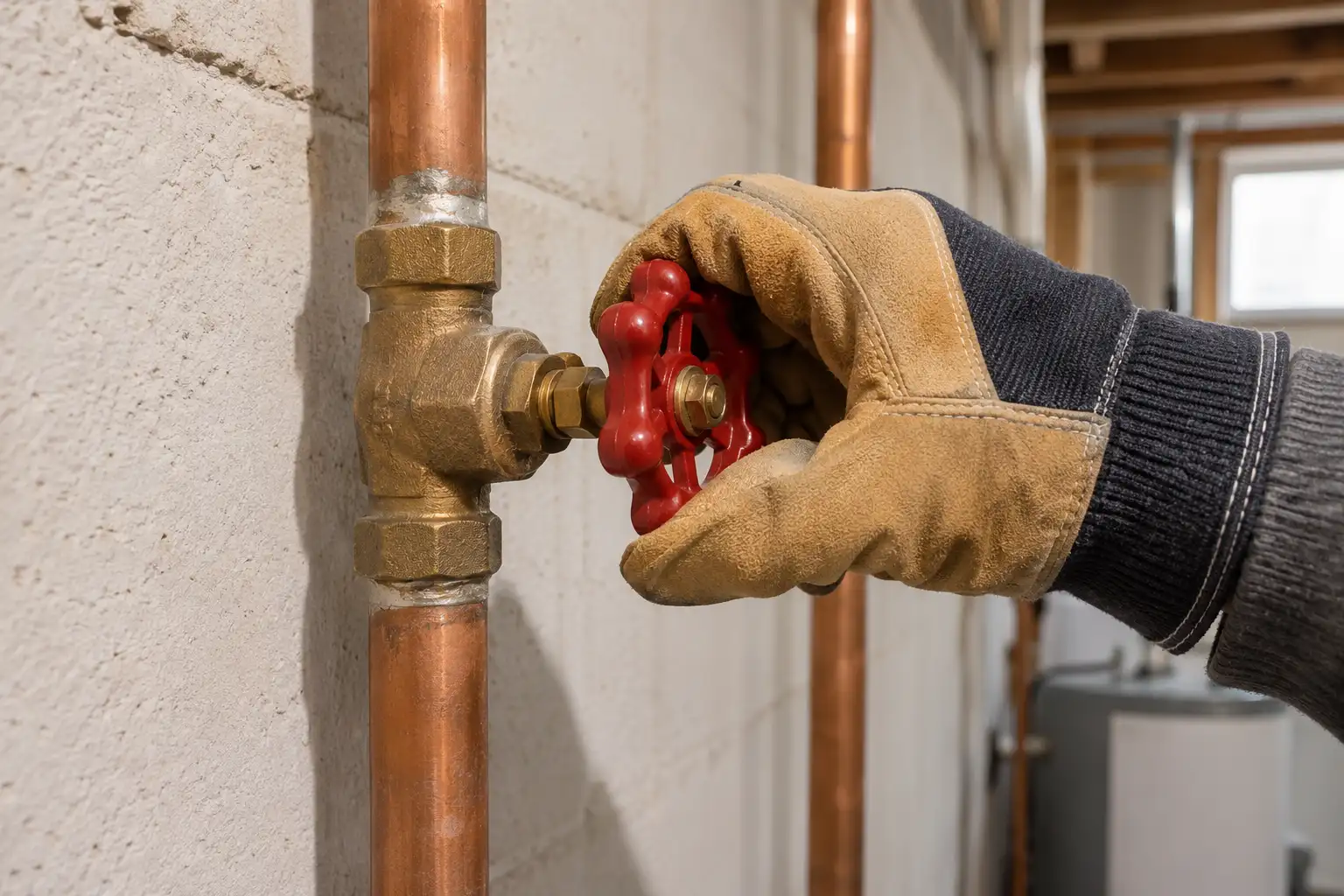
Where to find the main water valve
Every house has a main valve where the water line comes in. Learn where yours is before you ever need it.
- Basement
- Look on the wall that faces the street, near where the pipe comes through the foundation.
- Crawl space
- The valve often sits just inside the access hatch, close to the foundation wall.
- Utility room or garage
- Check near the water heater, where the cold line enters the house.
- Closet near the front
- Some houses tuck the valve behind a panel in a coat closet or under the stairs.
- At the meter
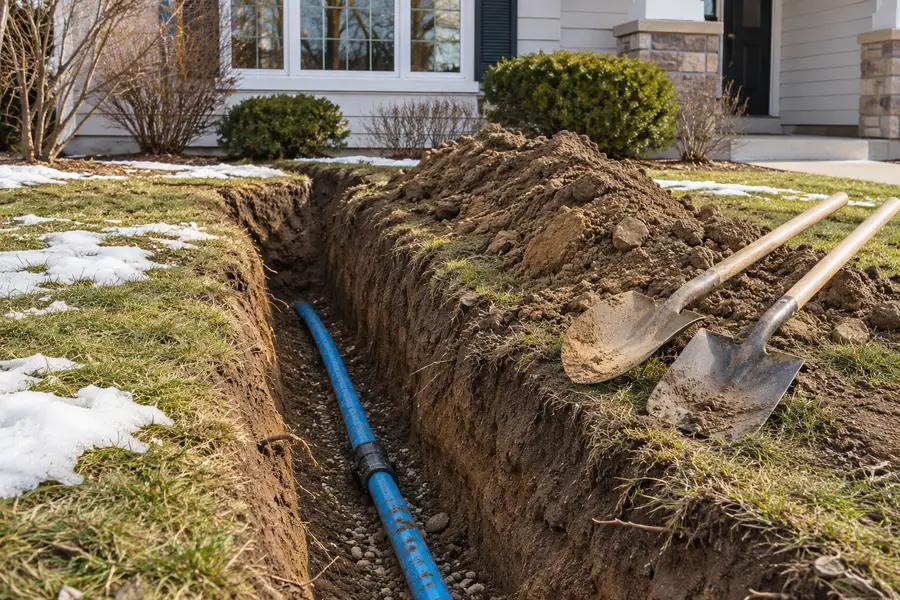
- If you cannot find a valve inside, the curb valve near the meter can stop the water, often with a special key.
Turn a wheel handle to the right as far as it will go. A lever is closed once it points across the pipe instead of along it.
Close one fixture or the whole house
Many fixtures have their own small valve. Using it keeps water running everywhere else while you wait.
Close the main valve when
- Water sprays from a pipe in a wall or ceiling
- You cannot tell where the leak comes from
- The fixture valve will not turn or keeps leaking
- Water is spreading fast across the floor
A fixture valve is enough when
- The leak is clearly under one sink or behind one toilet
- The small valve turns fully and the leak stops
- The water heater leaks and its cold valve closes
- The washing machine hose has split
Make the room safe before you clean up
Water and electricity are a dangerous mix. Take these steps before stepping into a wet room.
Switch off the circuits
Turn off power to wet rooms at the breaker panel, if the panel itself is dry.
Watch the ceiling
A ceiling that sags with water can fall. Keep people out from under it.
Unplug what you can reach safely
Only unplug devices if you are standing on a dry floor.
Call the gas company if needed
Any smell of gas near the furnace or water heater means leaving first and calling from outside.
Protect the house while you wait
With the water stopped and the power cut, every minute spent drying now saves damage later.
Lift things off the floor
Move rugs, boxes, electronics and furniture to a dry room.
Soak up standing water
On hard floors, a mop, old towels or a wet vacuum lifts most of the water.
Open the drains
Open a basement or ground floor tap and let the pipes empty.
Get the air moving
Fans and a dehumidifier help wet surfaces begin to dry.
Take photos
Record the leak and the wet areas for your insurance company.
Water coming through the ceiling
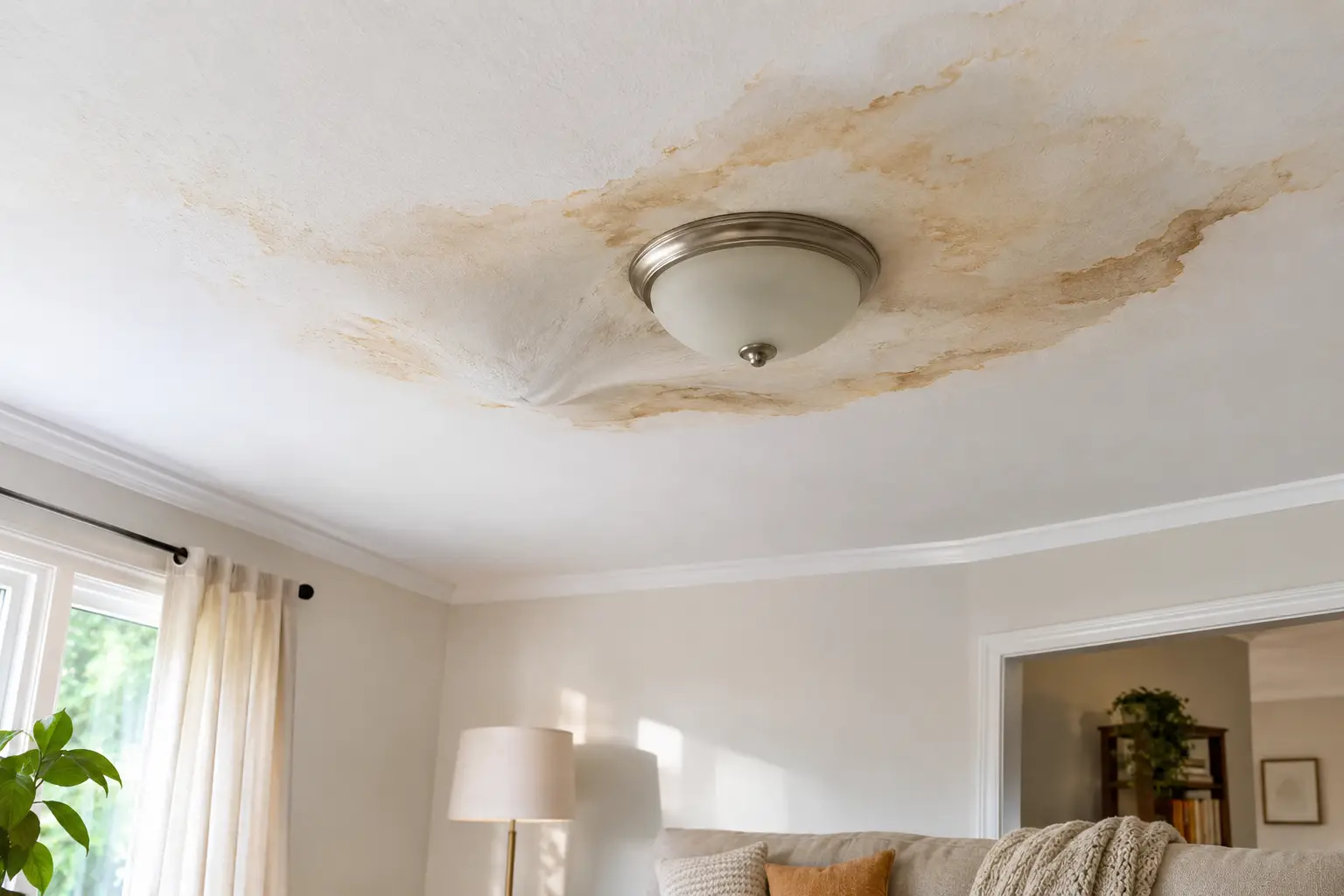
Water above a ceiling usually comes from a bathroom, a supply pipe or the water heater on the floor above.
Switch off power to that room first. If the ceiling sags, poke a small opening at its lowest spot with a screwdriver so the water runs into a bucket rather than bringing the drywall down.
Then trace the floor above for a running toilet, an overflowing tub or wet flooring. When the source stays out of sight, the leak detection page shows how a plumber tracks it down.
-
Power off first
Never touch a wet light fixture.
-
Relieve the bulge
Drain trapped water into a bucket.
-
Check above
Look for the fixture that is leaking.
Who to call for each kind of leak
Details that help on the phone
A clear description helps the plumber arrive ready for the job. Say where the water is coming from, how fast it is moving, when it started and whether you managed to shut it off.
Mention the type of pipe if you can see it, and whether this has happened before. A photo on your phone is a big help when the leak is hard to describe.
- Where the water is and where you think it comes from
- Whether the main valve or a fixture valve is closed
- How long the leak has been running
- Anything that changed recently, like a cold night or a new appliance
For winter leaks, our pages on frozen pipe repair and water line repair explain what usually caused the damage.
If the leak is in the basement
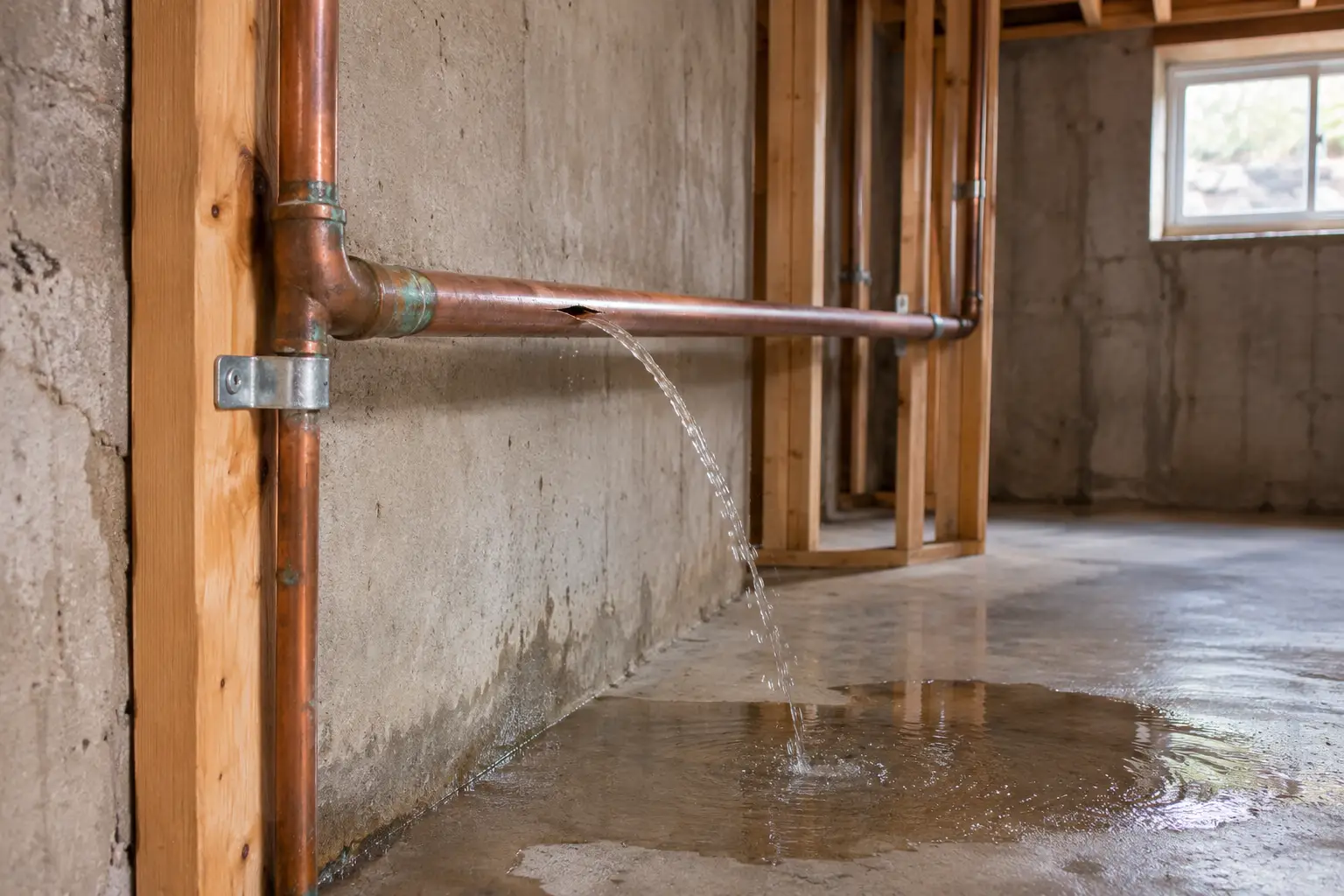
Basements collect water from leaks anywhere above them, so a wet basement floor does not always mean the leak is down there. Check the pipes overhead, the water heater and the laundry area before you assume the worst.
Never walk through standing water that might reach an outlet, an extension cord or the furnace. Cut the power from a dry spot first, or wait for help if you cannot reach the panel safely.
- Check the water heater and the laundry hoses first
- Look at the pipes running along the ceiling joists
- Watch the floor drain to see whether water is rising or draining
Leak questions people ask in a hurry
- How fast should I turn off the water after a leak starts?
Call as soon as the water is off. Even a small split can pour out gallons each minute, and the damage grows the longer the water runs.
If you cannot find the main valve quickly, close the small valve nearest the leak while someone else looks.
- What if the main valve is stuck?
Avoid using a pipe or bar for extra leverage, since an old valve can snap and make the leak worse.
Try the curb valve near the meter instead, or call us and the city water department if you cannot stop the water.
- Does the water heater need switching off while the main is closed?
When the water stays off for more than a short time, switch the heater off or set a gas unit to pilot. An electric heater can be damaged if its elements run while the tank is drained, so switch it off at the breaker.
- Can I use a regular vacuum on wet floors?
No. Use a wet vacuum built for liquids. A household vacuum can short out and cause a shock, and it is not built to pull water out of carpet.
- How long does it take a wet room to dry?
Surfaces may feel dry within a day, but drywall, insulation and subfloors can stay wet for several days.
If anything still feels damp after two or three days, have it checked before mold has a chance to start.
- Will a small leak cause mold?
Mold can start growing in damp materials within a couple of days. Drying the area quickly and fixing the leak are the best ways to prevent it, along with removing soaked carpet pad and opening up damp cabinets.
- Should I call my insurance company right away?
It is worth calling your insurer as soon as the leak has stopped and the room can be entered safely. Keep photos of the leak and the damage, along with any parts the plumber removes, since they help explain what happened.
- What if the leak stops on its own?
A leak that stops can start again, especially a frozen pipe that has not fully thawed.
Have the pipe checked before you turn the water back on fully, and our frozen pipe repair page explains why a thawing line can split later.
- Can we keep living in the house after a leak?
Usually, yes, provided the leak has stopped and wet rooms have no power. Stay out of rooms with a sagging ceiling or standing water near electrical outlets until they have been made safe.
- What should I do if I am renting?
Stop the water and make the room safe first, then call your landlord or property manager right away and tell them what you found. They will want to arrange the repair.
- Do I need to cut power to every room?
Only if water has reached the main panel area or many rooms at once, and only when you can stand on dry ground to reach the panel. Otherwise switch off the circuits for the wet rooms and leave the rest on.
- How do I stop a washing machine hose leak?
Close the two valves behind the washer, which usually have red and blue handles. Then pull the machine out gently and replace the split hose with a braided one before using it again.
- Do I need to move out while the house dries?
Rarely. Most homes can be lived in while fans and a dehumidifier dry the wet rooms. Large floods, sewage or wet electrical systems are the exceptions where staying elsewhere is safer.
- When is it safe to open the main again?
Only after the leaking pipe has been fixed or closed off with a valve of its own. Open the main slowly and watch the repaired area for a few minutes before using water normally.
- What if water comes back up through the drains?
Stop using water everywhere in the house. Water rising through a floor drain or a tub means the main drain is blocked, and our drain cleaning page explains what happens next.
- What should I keep near the main valve?
A flashlight, a towel and, for older valves, a small wrench to help grip a stiff handle.
Hang a bright tag on the valve so everyone at home spots it quickly during a leak.
- Should I photograph the damage before cleaning up?
Yes, once it is safe to walk in. Take wide shots of each wet room and close photos of the leak itself and any damaged belongings.
These help your insurance company and give the plumber a clear picture of what happened.
- What is the single most useful thing to do before a leak ever happens?
Find the main water valve, check that it turns and show everyone in the house where it is.
In a real leak, those few minutes saved searching for the valve make the biggest difference to the damage.
- Can I prevent most leaks from happening at all?
Many leaks can be prevented. Replace rubber washer hoses with braided ones, drain outdoor faucets each fall, keep the heat steady in winter and fix small drips early. Our guides cover each habit in plain steps.

Water still leaking? Call us.
Once the water is off, a licensed Twin Falls plumber can come out and repair the leak.
Stop it
Shut off the water at the valve.
Protect it
Make the room safe and move belongings.
Fix it
A plumber repairs the source.