Signs of Hard Water in Your Plumbing
Hard water leaves minerals behind wherever it flows, and the signs show up on fixtures, inside the water heater and in the way your pipes behave.
What hard water does inside the pipes
Hard water carries dissolved calcium and magnesium. They do no harm to drink, but they settle out when the water heats or evaporates. The signs of hard water in your plumbing start small, on a faucet or a shower head, and grow slowly where nobody sees them.
- On the fixturesWhite crust around spouts, drains and shower heads.
- In the water heaterA gritty layer building up on the tank floor.
- Inside the valvesGrit that keeps cartridges and fill valves from sealing.
Signs of hard water in your plumbing
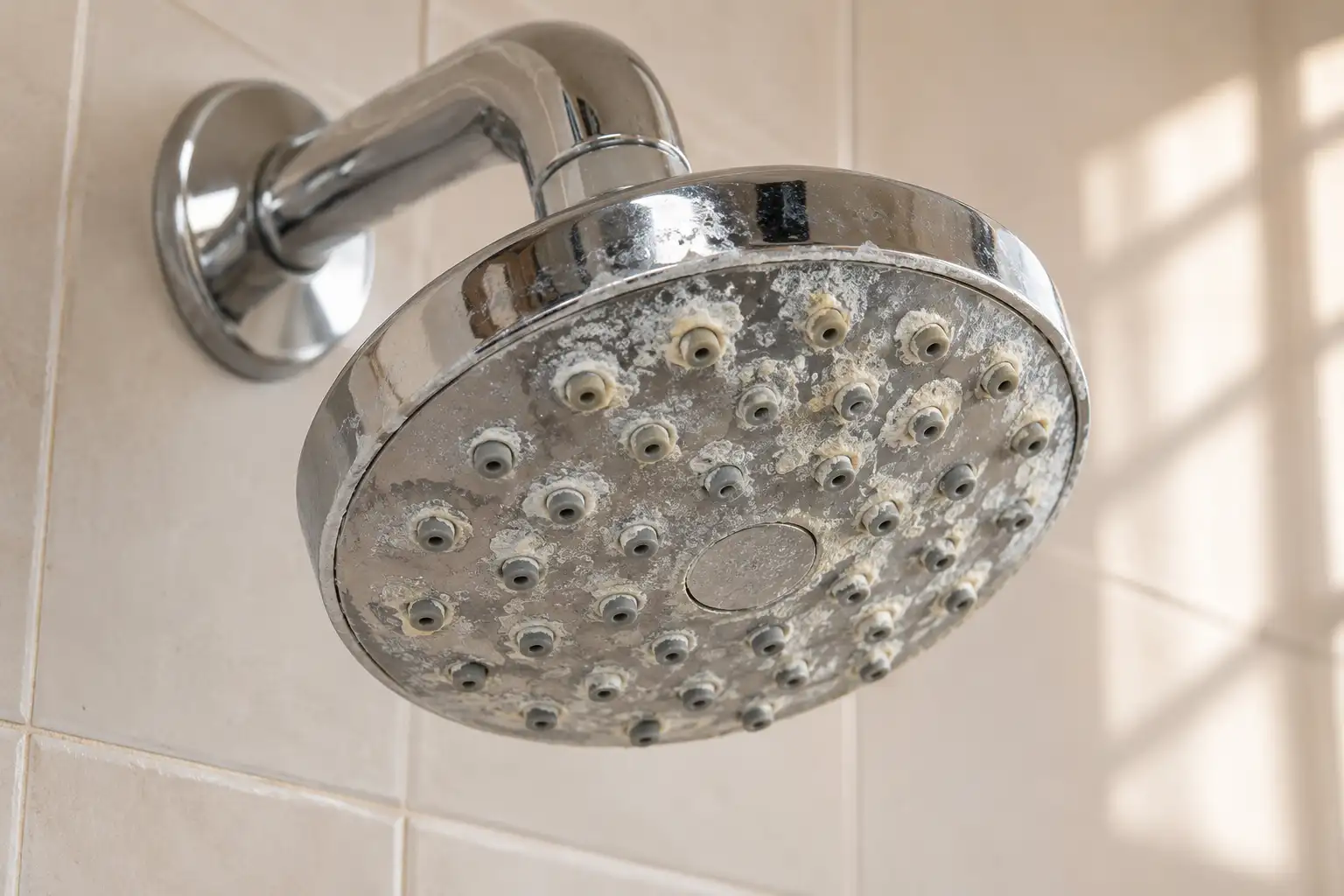
White scale on fixtures
Crusty white deposits around faucets, shower heads and drains.
Spots on dishes and glass
Cloudy film on glasses and spots on shower doors after they dry.
Weak flow
Shower heads and aerators that slowly lose pressure as scale builds up.
A popping water heater
Sediment in the tank makes rumbling and popping sounds as it heats.
Valves that wear out early
Faucet cartridges and toilet fill valves that stick or leak sooner than expected.
Soap that will not lather
Soap and shampoo leave a film instead of rinsing away cleanly.
Where scale does the most damage
- The water heater
- Sediment collects on the bottom, makes the tank noisy and forces the burner or elements to work harder. Our noisy water heater guide covers the sounds.
- Faucet cartridges
- Scale wears the moving parts, so the faucet drips or the handle turns stiffly.
- Toilet fill valves
- Mineral grit keeps the valve from closing fully, so the toilet runs.
- Shower heads and aerators
- Tiny openings clog first, which is why flow drops slowly over months.
Limit the buildup at home
You cannot remove the minerals from the water without treatment, but you can keep scale from causing trouble.
Soak shower heads
A soak in white vinegar loosens scale from the nozzles.
Clean the aerators
Unscrew faucet tips and rinse out the grit every few months.
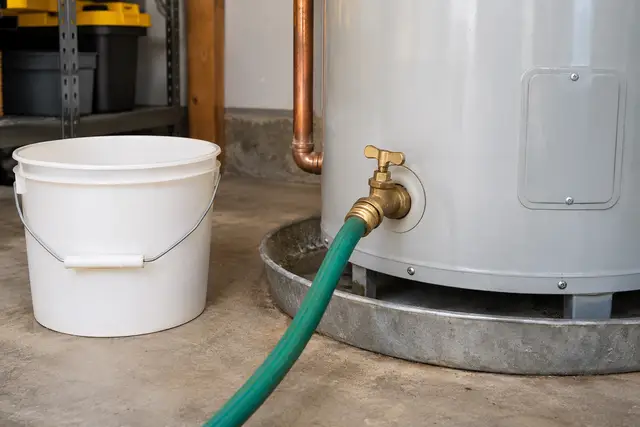
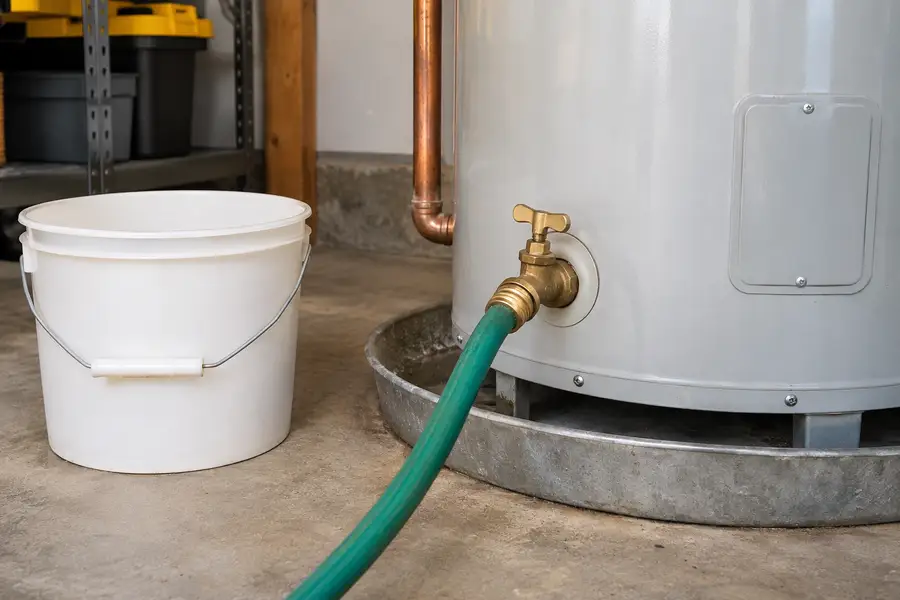
Flush the water heater
Draining a few gallons once a year removes loose sediment.
Wipe fixtures dry
Drying faucets and glass after use stops new spots forming.
Whether a water softener makes sense
A water softener removes calcium and magnesium before the water reaches the rest of the house. It reduces scale on fixtures and inside the water heater, and it can help valves and cartridges last longer.
Whether one makes sense depends on how hard your water is and how much the scale bothers you. A simple test kit shows the hardness, and a plumber can explain the options for your house.
If scale has already damaged a faucet, our faucet repair page explains the fix. A water heater full of sediment may need a water heater repair.
Hard water or a different problem
Some signs look like hard water but come from somewhere else.
Probably something else
- Rusty or brown water, which points to corroded pipes or an old tank
- Low pressure at every tap at once, which can mean a leak in the water line
- A rotten egg smell from hot water, which comes from the anode rod
Probably hard water
- Chalky white rings on taps and shower heads
- Spots on glasses and shower doors
- Pressure that drops slowly at one fixture over months
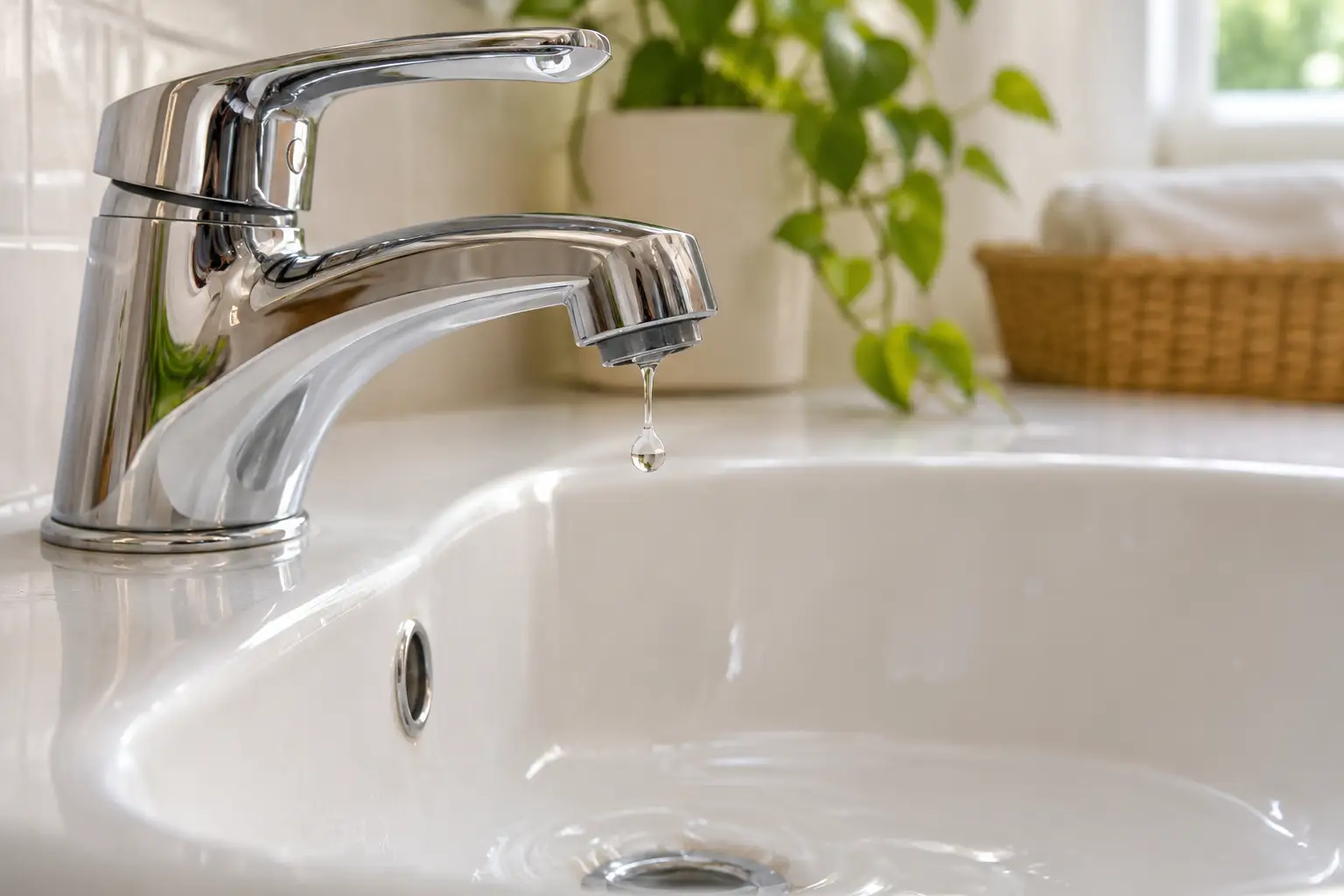
Cleaning scale off fixtures without damage
Scale comes off with mild acid and patience, not with force.
White vinegar dissolves most mineral deposits. Soak a cloth in it, wrap it around the faucet or shower head and leave it for an hour, then wipe the softened scale away.
Avoid steel wool and harsh scouring pads on chrome and coated finishes. They scratch the surface, and scratches give scale a rougher place to cling next time.
-
Soak, then wipe
Let vinegar do the work for an hour before scrubbing.
-
Remove small parts
Aerators and shower heads clean best off the fixture.
-
Rinse well
Run water through the fixture to flush out loose grit.
How scale affects each part of the system
Scale forms fastest where water gets hot or sits still. That is why the water heater, the shower head and the aerators show it first, while cold pipes in the walls collect it far more slowly.
Inside a faucet, scale roughens the surfaces of the cartridge so it no longer seals smoothly. The handle turns stiffly, then the faucet starts to drip even when it is closed.
Inside a toilet tank, mineral grit settles in the fill valve and on the seat under the flapper. The valve may not shut off fully, and the flapper may no longer seal, which leaves the toilet running.
Inside the water heater, minerals settle as a layer on the bottom of the tank or on the electric elements. The heater takes longer to warm the water and makes popping or crackling sounds while it works.
- Hot water fixtures show scale before cold ones
- Moving parts such as cartridges and fill valves wear out first
- Small openings in aerators and shower heads clog early
- Water heater sediment builds up year after year without a flush
Test your water hardness at home
A simple test strip from a hardware store gives a useful answer in a minute or two.
Run the cold tap
Let the water run for half a minute so you test fresh water from the line.
Fill a clean glass
Use a glass rinsed only with the same water.
Dip the strip
Hold it in the water for the time the package states.
Compare the color
Match the strip to the chart to read the hardness level.
If the result shows hard water and scale keeps damaging fixtures, ask the plumber about the options during your next visit.
Protect the water heater from hard water
The water heater takes the worst of hard water because heat drives the minerals out of the water fastest. A tank that is never flushed can collect several inches of sediment on the bottom over the years.
A yearly flush removes the loose layer before it hardens. An anode rod in good condition protects the steel tank from corrosion, which hard water can speed up.
- Flush the tank once a year, more often if the water is very hard
- Get the anode rod inspected now and then
- Listen for popping, which means sediment is building up again
- Keep the temperature moderate, since hotter water drops minerals faster
Our guide to a water heater making noise walks through a flush step by step.
Hard water questions from Twin Falls homes
- Is hard water bad for my plumbing?
Over time it can be. Scale narrows openings, wears valves and fills the bottom of the water heater with sediment.
Regular cleaning and a yearly water heater flush limit most of the damage.
- How can I tell if I have hard water?
White crust on fixtures, spots on dishes and soap that does not lather well are the usual signs. A home test kit shows how hard the water really is, which helps you decide whether treatment is worth it.
- Does hard water damage water heaters?
It adds sediment to the bottom of the tank, which makes the heater noisy and less efficient.
Flushing once a year helps, and our water heater repair page covers the fixes when parts fail.
- What is the best way to remove scale from a shower head?
Leave it in a bowl of white vinegar for at least an hour, then scrub the nozzles with an old toothbrush and rinse. If the shower head cannot come off, tie a bag of vinegar around it.
- Can hard water cause a toilet to keep running?
Yes. Mineral grit can stop the fill valve from closing fully. See our guide to a toilet that keeps running for the checks you can make in a few minutes.
- Do I need a water softener?
Not every home does. If scale keeps damaging fixtures or the water heater, a softener can help.
Testing the water first tells you whether it is worth it for your house.
- Does hard water clog pipes completely?
It rarely blocks a pipe completely, but scale can narrow older metal pipes over many years and reduce the flow. Weak pressure at one fixture is usually the aerator or cartridge rather than the pipe itself.
- Why do my glasses come out of the dishwasher cloudy?
Minerals left behind as the water dries cause the cloudy film. A rinse aid or a dishwasher setting for hard water usually helps, and it is one of the easiest signs of hard water to spot.
- Can hard water cause low water pressure?
It can at a single fixture. Scale clogs aerators and shower heads first, which slowly reduces the flow.
Low pressure everywhere at once is more likely a valve, a leak or a problem in the water line, and our water line repair page covers that.
- Is hard water safe to drink?
Yes. The minerals that make water hard are not harmful to drink. The trouble hard water causes is to fixtures, appliances and the water heater, not to health.